Glass That Says No to the Sun: Cooling Down Bristol's South-Facing Rooms
Photo: Neil Owen , CC BY-SA 2.0, via Wikimedia Commons
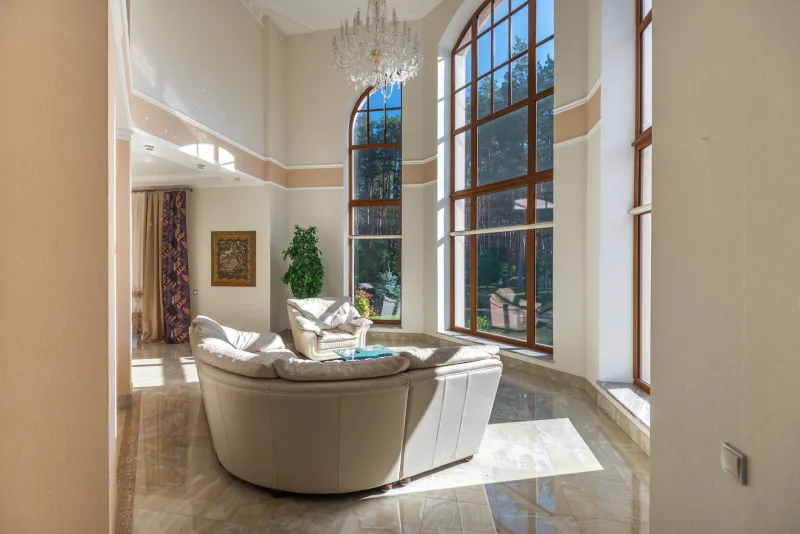
There's a particular afternoon in late April when a south-facing living room in Bristol flips. The heating's been off for weeks, the back door is open, and yet the sofa is too hot to sit on. If you live in a Victorian terrace in Totterdown, a first-floor flat off Gloucester Road or a loft conversion in Horfield, you've probably met that afternoon already.
The instinct is to blame the windows. Sometimes the instinct is right, but not for the reason people think. It's rarely about warmth leaking out. It's about sunshine pouring in, and staying in.
What solar gain actually means
Solar gain is simply the heat that arrives with daylight. Sunlight lands on glass, most of it passes through, and then it hits your carpet, your sofa and your walls. Those surfaces absorb the energy and re-radiate it as heat, which then has nowhere much to go because warm air is a poor way of shifting heat out of a room. The result is a slow build-up through the afternoon that peaks around four or five o'clock — long after the sun has moved off the glass.
Two numbers describe what a window is doing. The U-value tells you how readily heat escapes. The g-value (sometimes called the solar factor) tells you what proportion of the sun's energy gets through. A standard double-glazed unit with a low-E coating typically has a g-value somewhere between 0.6 and 0.7, meaning roughly two-thirds of the incoming solar energy is admitted. Great in January. Less great in June.
Why ordinary double glazing can make things worse
Here's the awkward bit. The coatings that make modern double glazing good at keeping heat in also tend to keep solar heat in. A room that was draughty and leaky in 1985 might have been uncomfortable on a hot day, but at least the heat drifted away through gaps. Seal the same room up properly, add a well-insulated loft and a low-E unit, and you've built a very effective trap.
That's not an argument against insulation. It's an argument for thinking about the whole room rather than just the U-value on the quote.
Three levers: glass, film, shading
Solar control glass
A dedicated solar control unit uses a coating designed to reflect or absorb a chunk of the sun's near-infrared energy. Typical g-values land between 0.25 and 0.45, so you're turning away a good half of the heat while still letting in plenty of daylight. Some units are subtly tinted; many are near-neutral. Hard coatings are more durable and often used in sealed units; soft coatings perform better but need protecting inside the cavity — which is exactly where a sealed unit puts them.
Indicative cost in 2026 for replacing a sealed unit with a solar control version: roughly £250 to £500 per window, depending on size, frame type and access. If you're already replacing units, the uplift over standard glass is often modest. If the frames are sound and only the glass is being swapped, it's a genuinely sensible upgrade.
Applied film
Retrofit film is the cheap option, and it does work — decent films cut solar gain by 40 to 60 per cent. But be careful. Film on the room-side surface of a sealed unit changes how heat moves through the glass, and on some units that raises the risk of thermal stress cracking. It can also affect any warranty on the unit. A DIY roll costs perhaps £30 to £60 per square metre; professional installation runs £50 to £90 per square metre and is the safer bet on anything south-facing and large.
Shading — and why outside beats inside
A blind inside the room is catching heat that has already got in. An awning, external blind, brise-soleil or a well-placed tree stops it at the glass. External solutions can block 70 to 80 per cent of solar gain on a south-facing window and are the single most effective measure on a badly overheating room. Budget around £500 to £1,500 for a decent awning, more for external blinds.
One caution for Clifton, Redland and Old Market: fixings to the outside of a building in a conservation area may need consent, and listed buildings certainly will. Internal shutters and well-chosen blinds are usually a lower-friction route.
South-facing rooms that behave differently
A Victorian bay front in Redland is a lovely thing and a terrible solar collector — deep reveals, big single-glazed sashes and a shallow room mean the heat lands on the back wall and sits there. Here, secondary glazing plus external shading often beats a full glass swap, and it keeps the sash profiles that the street expects.
A new-build flat near Temple Quay or Bedminster Green is the opposite problem: full-height glazing, sealed airtight, and often very little external shading allowed by the building's appearance. Overheating has been a recognised design issue in new dwellings for a few years now, and if you own one of these flats, film plus internal reflective blinds plus a bit of cross-ventilation discipline is usually the realistic package.
A loft conversion in Horfield or St Werburghs sits under a hot roof and behind a big south-facing velux. Solar control glass in the roof light is worth far more here than in the hallway window.
Does this cost you in winter?
A little, yes. Solar control glass reduces free winter solar warmth along with the summer excess. In a Bristol winter, that free warmth is worth something — perhaps a few per cent on your heating. But for most overheated south-facing rooms, the summer comfort gain easily outweighs it, and the room-by-room approach matters: put ordinary high-solar-gain glass where you want the winter sun, and solar control where you don't.
A short decision checklist
- Is the room actually too hot, or just occasionally stuffy? Fix ventilation first; it's cheaper.
- Does the overheating peak between 2pm and 6pm? That points to solar gain rather than poor insulation.
- Are the frames sound? If yes, glass-only replacement is usually the best value.
- Is the glazing large, south-facing and hard to shade? Prioritise that room and leave the rest alone.
- Can you shade externally without planning friction? Do it before spending on glass.
- Are you in a conservation area or listed building? Check before ordering anything that fixes to the outside.
- Are you replacing units anyway? Ask for the g-value alongside the U-value. Any reputable supplier will have it.
Sunlight through a window is still one of the best things about a house. The trick is keeping it as light rather than as heat — and that's a room-by-room decision, not a whole-house one.