The Sticker Number Isn't the Whole Story: Choosing Glass That Works Room by Room in Bristol
If you have spent any time comparing window quotes, you will have met the U-value. It is the headline number on the brochure, the one installers circle, and the one that makes a window sound “better” than the one next to it. It matters — but it is not a complete description of how a window will perform in your home. In Bristol, where we have sun traps, shaded Victorian terraces, busy arterial roads and a damp-ish winter climate, choosing glass on U-value alone can leave you with a perfectly efficient window that is uncomfortable in practice.
What the U-value actually tells you
A U-value measures how quickly heat passes through a material. Lower is better, broadly speaking. For a window, it combines the glass, the frame, the spacer bar and the seals. A good double-glazed unit might sit around 1.2 to 1.4 W/m²K, while a triple-glazed unit can go lower. That is useful information if your main concern is keeping heat in on a cold January night.
What it does not tell you is how much sunlight will pour through, whether the room will overheat in June, how much noise will get past the glass, or whether condensation will collect on the inside pane while you are making tea. Those are separate conversations, and they matter just as much to comfort.
Solar gain: the free radiator you did not specify
South-facing rooms are lovely in Bristol. A lounge in Bishopston or a kitchen in Southville can pick up warmth from the sun well into the afternoon, even when the air outside is chilly. That is solar gain, and in winter it is genuinely useful. It can reduce how much you lean on the heating.
In summer, the same effect can turn a south-facing room into a greenhouse. If you choose a very high-performance unit with a low solar gain factor, you may solve the summer problem but lose some of that free winter warmth. If you choose a unit with a high solar gain factor, you may love it in December and regret it in July. The useful figure here is the g-value, which describes how much solar energy passes through the glass. Ask for it alongside the U-value, especially for south and west-facing rooms.
Glare and fading are quiet deal-breakers
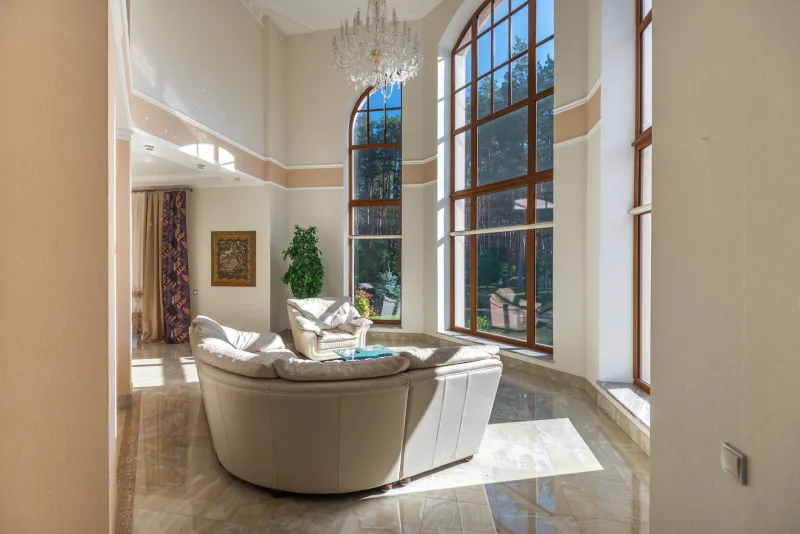
A south or west-facing lounge with a large tv and a pale sofa can be a difficult room if the glass lets in a lot of direct sun. Glare is not usually a safety issue, but it is a daily annoyance. Fabrics, artwork and wooden floors can also fade over time. Solar control glass can help, but it can slightly reduce daylight and change the appearance of the glass from outside. It is worth seeing a sample and asking how it will look on your elevation, particularly on a period terrace where the street view matters.
Condensation is a home problem, not just a glass problem
It is tempting to think that better glass will eliminate condensation. It can help, especially if warm-edge spacer bars and well-sealed frames keep the edges of the glass warmer. But condensation is usually about moisture and ventilation. Cooking, drying clothes indoors, breathing and showering all put water vapour into the air. If that moisture cannot escape, it will find the coldest surface, which is often the glass.
So before you spend extra on triple glazing to fix a misty window, think about extractor fans, trickle vents, window opening habits and whether the room has a damp problem. A good installer should talk about ventilation rather than simply promising that a new unit will stay clear.
Noise: bedrooms on Gloucester Road or the Wells Road need a different conversation
If you live on a busy road, the U-value is almost beside the point. You want to know how the window performs acoustically. Standard double glazing helps a little, but acoustic laminated glass and unequal glass thicknesses can make a noticeable difference to traffic noise. So can airtightness, because sound leaks through gaps as readily as warm air does.
Be careful with trickle vents. They are important for ventilation, but they can also let noise in. Ask about acoustic vents if a bedroom faces a noisy street. There is no point fitting excellent acoustic glass and then leaving a permanent hole in the frame.
Orientation, shade and period detail
A north-facing room in a shaded Redland terrace has a different job from a sunlit loft conversion. It may need to maximise daylight rather than keep heat out. A conservation area may limit what you can change visually, so secondary glazing or refurbishing the existing sashes may be the more sensible route. In older Bristol homes, improving draughtproofing and loft insulation can sometimes deliver more comfort per pound than upgrading every pane.
Questions to ask before you choose glass
Ask for a room-by-room specification, not one blanket answer. What is the U-value and g-value for each elevation? What is the acoustic rating where noise matters? How will the unit handle condensation, and what ventilation is being allowed for? What does the glass look like from the street? Is the frame suitable for the wall construction? And does the installer understand conservation area rules if your home is in one?
The practical answer
Glass is not a single product with a single score. It is a set of trade-offs. In a Bristol home, the best choice is usually the one that matches the room: solar control where the sun is fierce, acoustic glass where the road is loud, good daylight where the terrace is shaded, and sensible ventilation everywhere. The U-value is a useful starting point, but it should not be the only number on the table.